Indoor Broom Buying Guide: Bristles, Heads and Dustpan Sets
An indoor broom is the cheapest thing on the cleaning aisle and the easiest to get wrong. Bristle polymer, head angle and dustpan lip decide whether a sweep leaves a clean floor or a grey smear across it. Get those three right and the rest of the buying decision is packing, carton count and price. This guide is written for people choosing models to stock, not for a shopper standing in an aisle.
Bristle polymer decides almost everything
A broom is a simple tool with a very old design, and the modern household version still lives or dies on its filament. Household brooms mostly use one of three polymers, and they behave nothing alike on a hard floor.
- PP (polypropylene). Stiff, chemically resistant, cheapest per kilo. It suits yards, driveways, sites and rough concrete. On a polished indoor floor it flicks dust forward instead of gathering it.
- PET (polyester). A balance of spring and abrasion resistance, with good shape retention. Often split at the tip to trap fine dust. The safest default for a broom for indoor floors that also gets used on a step or balcony.
- Nylon. Tolerates damp and sweeps gently. A sensible pick for indoor tile, laminate and sealed wood, and for humid markets where a broom hangs in a wet storeroom.
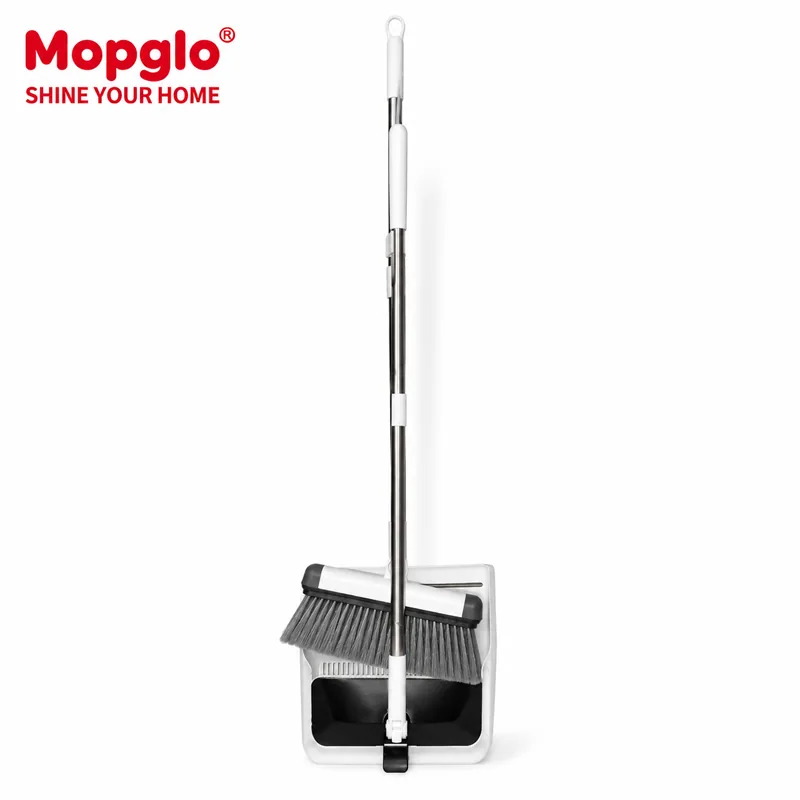
We go deeper on this in our note on PP, PET and nylon broom bristles. The short version: PP sells on price, PET sells on performance, nylon sells on feel. Our Folding Broom and Dustpan Combination uses split-tip PET bristles, which is a fair picture of where the middle of the market sits.
Soft, medium or stiff: read the grit, not the room name
"Indoor" covers a lot of floor. Soft bristles suit fine dust on tile, laminate and sealed wood, and they reach under low furniture without scratching. Stiff bristles are for grout lines, thresholds, entry matting and the strip of grit that walks in from a car park. A medium-soft head is what most households actually want, and it is what most supermarket own-label ranges settle on.
Split or flagged tips matter more than the headline stiffness. A flagged filament opens at the end and holds dust the way a stiff round filament cannot. Two brooms with the same polymer grade can feel completely different depending on whether the tips are flagged.
Sweeping is the dry half of floor care. Dry sweeping lifts crumbs and dust without water, so the floor is walkable straight away; wet mopping comes after, for the film that sweeping leaves behind. On sealed wood and laminate, daily dry work plus an occasional barely damp cloth is the normal routine. That makes bristle choice a weekly-use decision, not a detail.
Angled heads, edges and the hair problem
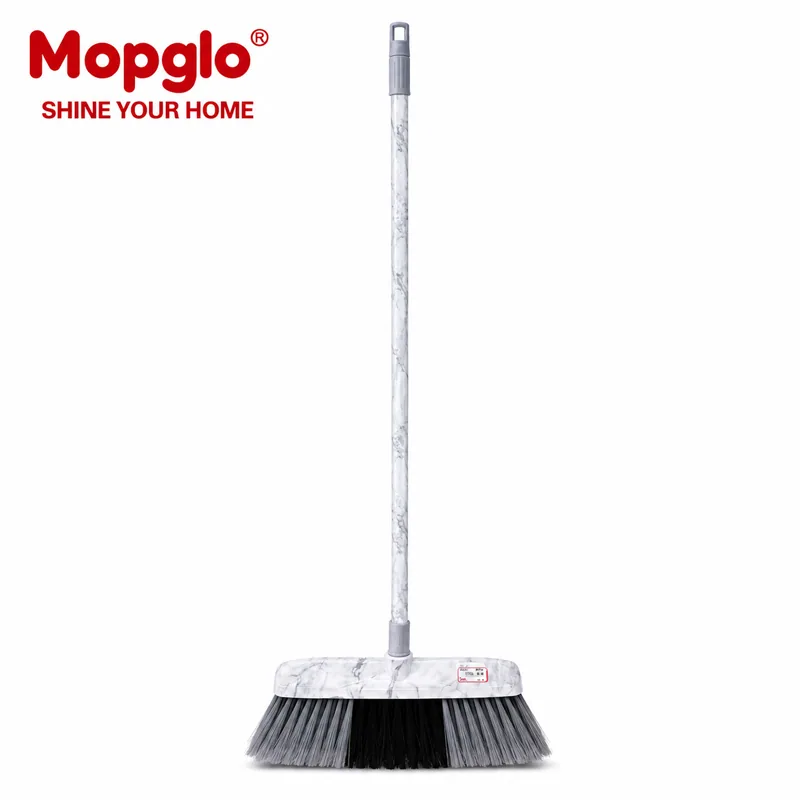
An angled head is a small moulding change with a big effect on the shelf. The bristle block sits at an angle to the handle, so the outer row reaches under cabinet toe kicks, along skirting boards and behind a toilet without the user kneeling. For janitorial buyers, that one feature often decides the sale.
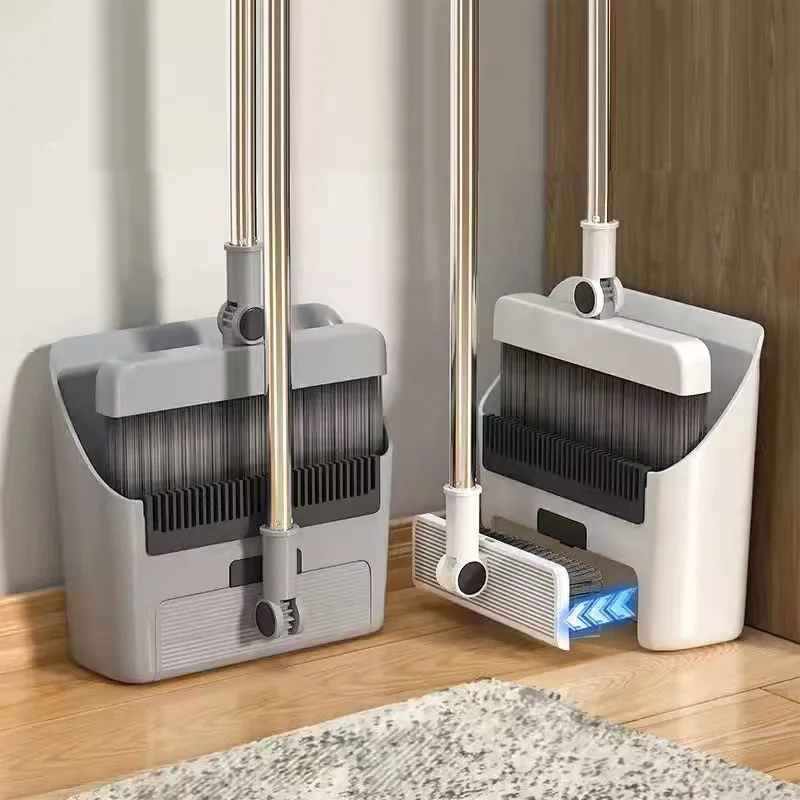
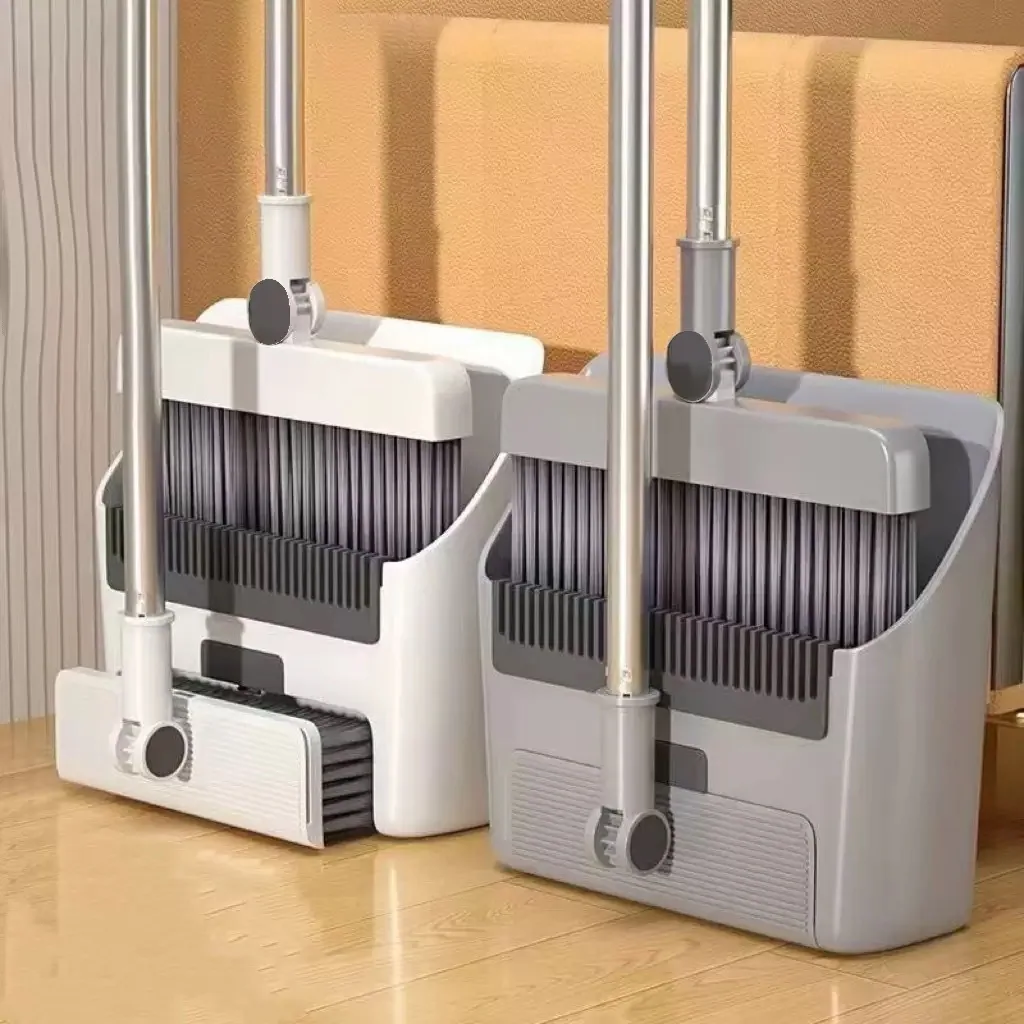
Hair is the harder problem. Long hair wraps around bristle tufts and builds up until the broom stops sweeping flat. A few designs fight back: split tips release hair more readily than blunt round filaments, and a rubber squeegee edge on the back of the head drags hair into a line you can pick up. Look at the dustpan too. Comb teeth moulded into the pan edge let a user rake hair off the bristles instead of pulling it out by hand.
Our indoor broom heads range includes a replacement broom head in UV-stabilised virgin polypropylene, which matters if you sell to buyers who keep a handle and swap heads rather than replacing the whole tool. A head-only line is also a low-cube filler for a container.
Silicone brooms: a different tool, not a better broom
Silicone rubber is a non-porous elastomer, which is why a silicone blade behaves so differently from a brush. There are no filaments to trap hair or hold odour, the blade can be rinsed, and it works on wet floors as well as dry ones. On smooth tile it pulls hair, fine dust and pet fur into a ridge that a dustpan picks up cleanly.
Our Silicone Magic Broom uses a high-density thermoplastic silicone rubber head with a one-piece edge that sits flat on the floor. It is not a replacement for a bristle broom on every surface. A blade struggles with leaves, gravel and rough grout, and it needs a reasonably smooth floor to seal against. Sell it as a second tool for bathrooms, kitchens and pet households, not as the only broom in the house.
Dustpan design: lids, lips and standing storage
A dustpan is a simple scoop, but the small details decide whether stock moves. Four things to check on a sample:
- Lip. A flexible TPR or rubber front edge hugs the floor and stops the last line of dust escaping. Rigid plastic lips leave a trail.
- Lid or windproof fold. A lidded pan holds debris and stops it blowing out on a balcony or in a draught. Folding pans do the same job with less shelf space.
- Standing or locking. A pan that clips to the broom and stands upright parks neatly in a cupboard corner. Shoppers notice this in the aisle.
- Handle height. The pan handle should match the broom so the set can be used without stooping, and pack as one unit.
Our broom and dustpan sets cover most of these positions, from the standing Broom and Dustpan Combination to the Small Sweeping Kit with its TPR front lip for countertops and shelves.
Quick comparison: which bristle for which floor
| Head material | Feel on hard floor | Best floors | Cost position | Watch out for |
|---|---|---|---|---|
| PP bristle | Stiff, flicks dust | Yards, concrete, rough thresholds | Lowest | Weak fine-dust pickup indoors |
| PET bristle | Springy, holds shape | Tile, laminate, mixed indoor and outdoor | Mid | Flagged tips matter more than the polymer name |
| Nylon bristle | Soft, quiet | Sealed wood, laminate, damp rooms | Higher | Cost climbs fast on long filament lengths |
| Silicone blade | Squeegee, no filaments | Smooth tile, bathrooms, pet hair | Higher | Poor on rough grout, gravel and leaves |
Storage, carton maths and the folding question
Storage is where a range quietly earns or loses money. A long broom takes up floor space in a small flat, and folding sets solve that. The Foldable Broom and Dustpan Set opens for sweeping and folds down to a compact block, packed 30 sets to a carton. The Plastic Broom and Dustpan Set with Carry Bar packs 40 sets to a carton and is stocked in blue, purple, beige and pink. Carton counts, not unit price, often decide which set a distributor can actually land at a sensible cost per shelf.
For tighter space again, the Three-in-One Folding Broom and Dustpan Set combines a soft-bristle broom, dustpan and floor brush in one folding frame, with the set standing on its own. Small formats sell well as add-on purchases next to mops and buckets.
What you can change on a private-label order
Bristle stiffness, broom handle length and colour are the adjustments we can make for a market, and that is usually enough to separate two retail ranges without new tooling. Our OEM programme runs at 2,000 to 8,000 pieces per style per colour, with colours matched to Pantone codes or your own samples. Logos go on by embroidery, silk print or heat print, and the pack can carry colour boxes, hot-stamped logos, carton marks and product labels. A pre-production sample is confirmed before mass production starts.
Handles are worth asking about early. We build handle shafts in reinforced stainless steel or aluminium with 0.4 to 0.6 mm wall thickness, and every product has to pass a drop test before it leaves the factory. Specifying a thinner gauge to hit a price point is a false saving on a tool that gets dropped daily.
How to start an order with us
Two routes. Pick from stock and the minimum order is the one shown on that item's listing, so a trial order is realistic. Or go private label through OEM and ODM, where we work from your colour samples, logo files and target market.
Zhejiang Chuangjie Commodity Co., Ltd. has been making household cleaning tools in Yiwu, Zhejiang since 2006, with more than 3,000 SKUs, 300+ injection moulding machines and annual output over 5 million units sold into 20+ countries. Email mopglohome@gmail.com with the models you want, target quantity and market, or send the details through the contact form and our team will come back with options.
FAQ
Are silicone brooms better than bristle brooms for indoor floors?
Not better, different. A silicone blade grips hair and fine dust on smooth tile and can be rinsed clean, but it struggles with gravel, leaves and rough grout. Most households do best with a bristle broom as the main tool and a silicone broom for bathrooms and pet areas.
Which bristle is the best broom for indoors on wood and laminate?
Soft to medium nylon or flagged PET. Both sweep gently without scratching a sealed surface, and flagged tips hold fine dust better than stiff round filaments. Keep PP for outdoor and rough use.
Do I need a lidded or folding dustpan?
If your market includes balconies, small flats or windy entryways, yes. A lid or windproof fold stops debris blowing out, and a folding set stores in a fraction of the space. Standing designs that lock to the broom also display well in store.
What is the minimum order for an indoor broom?
It depends on the route. Stock items carry their own minimum on each listing, so a trial order is possible. Private label starts at 2,000 to 8,000 pieces per style per colour, depending on the model and the changes you need.