Push Broom vs Regular Broom: Which Fits the Job?
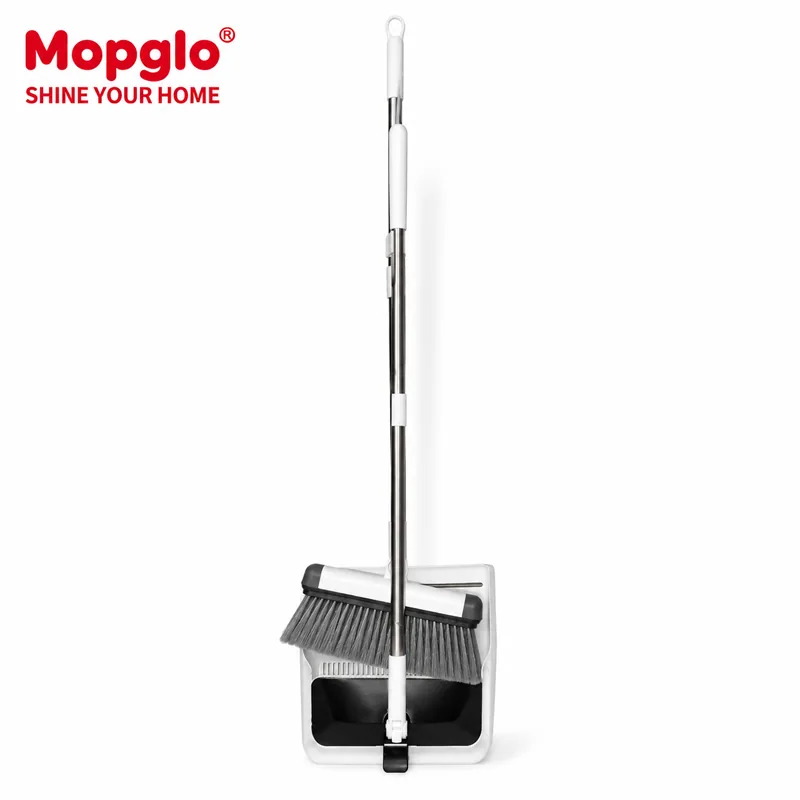
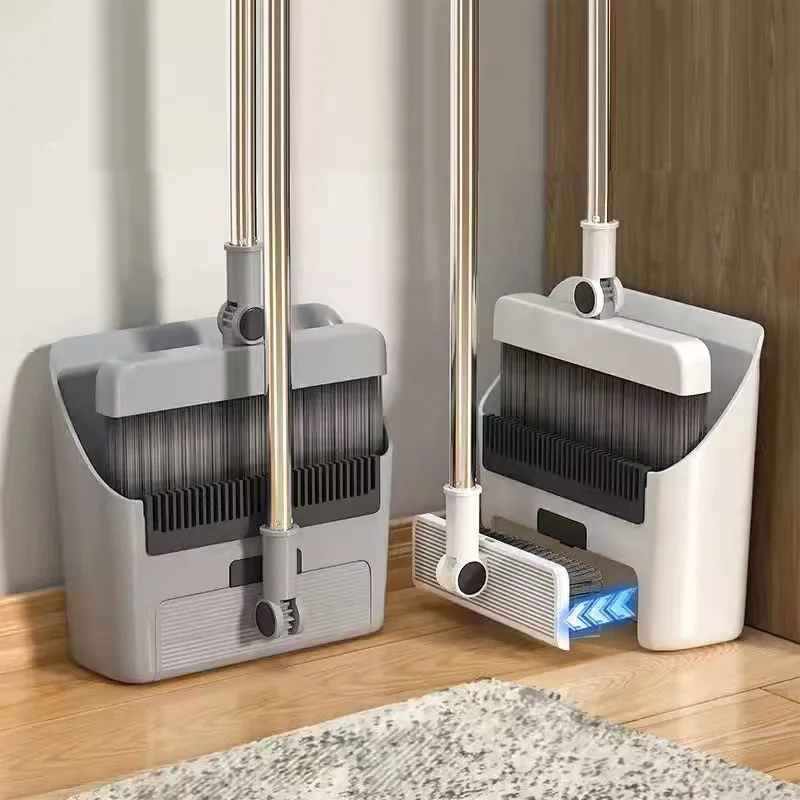
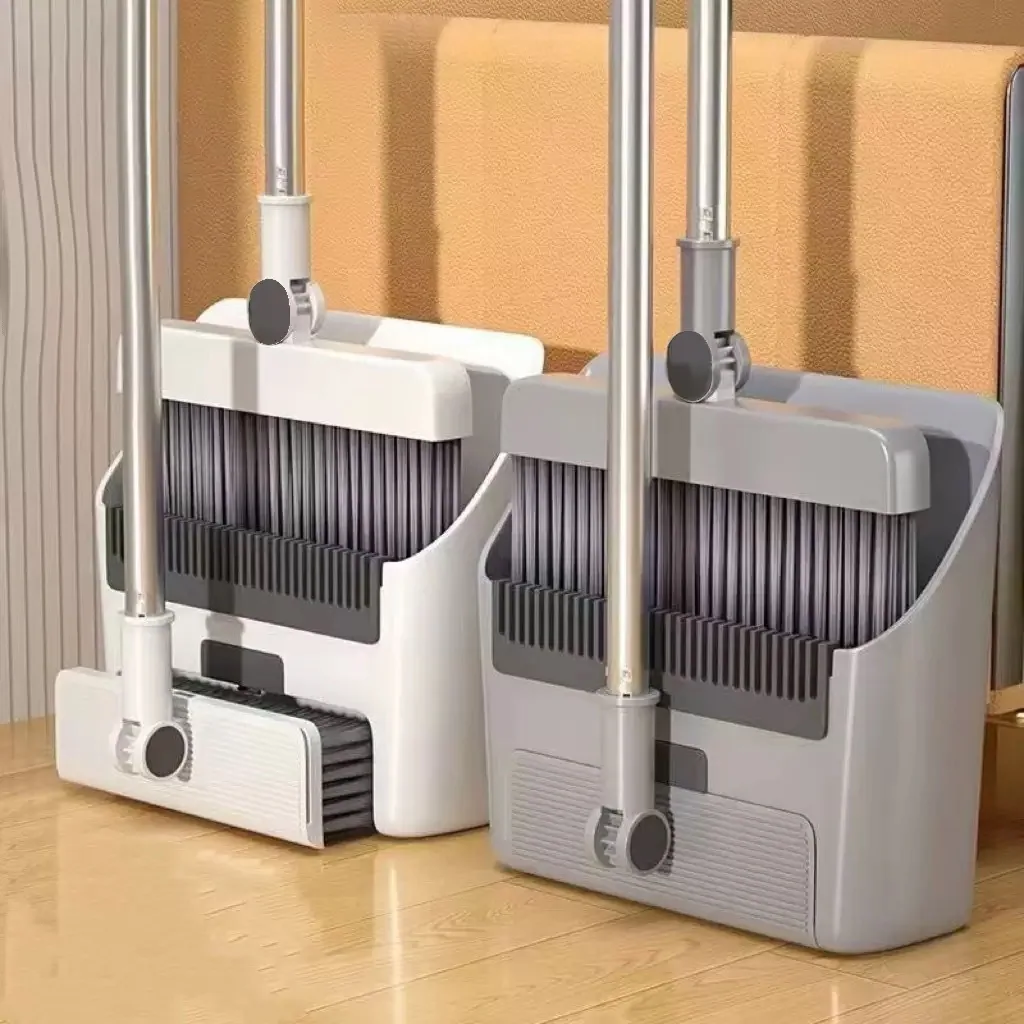
Put a push broom vs regular broom side by side in a catalogue and the choice stops being about quality. It is about the job each one does. A push broom has a wide block you drive forward with both hands. A regular broom, the angled-neck sort most households and supermarkets stock, is narrower, lighter, and built to pull dust into a pan. Get the pairing wrong and your customer fights the tool every morning.
A regular broom is a category, not a product
Buyers say "regular broom" and usually mean the flat, angled-neck broom sold with or without a dustpan. It is the broom that lives in a kitchen corner. Compact head, fine-cut bristles, a bent neck so the head lies flat while you stand upright.
That shape exists for precision. You steer it into corners, along skirting boards, under the lip of a counter. Sweeping happens on the pull, into the pan. Brooms are old tools that have been rebuilt in plastic, steel and synthetic fibre; the basic idea of a handle plus a bundle of stiff filaments has not changed much (Broom, Wikipedia).
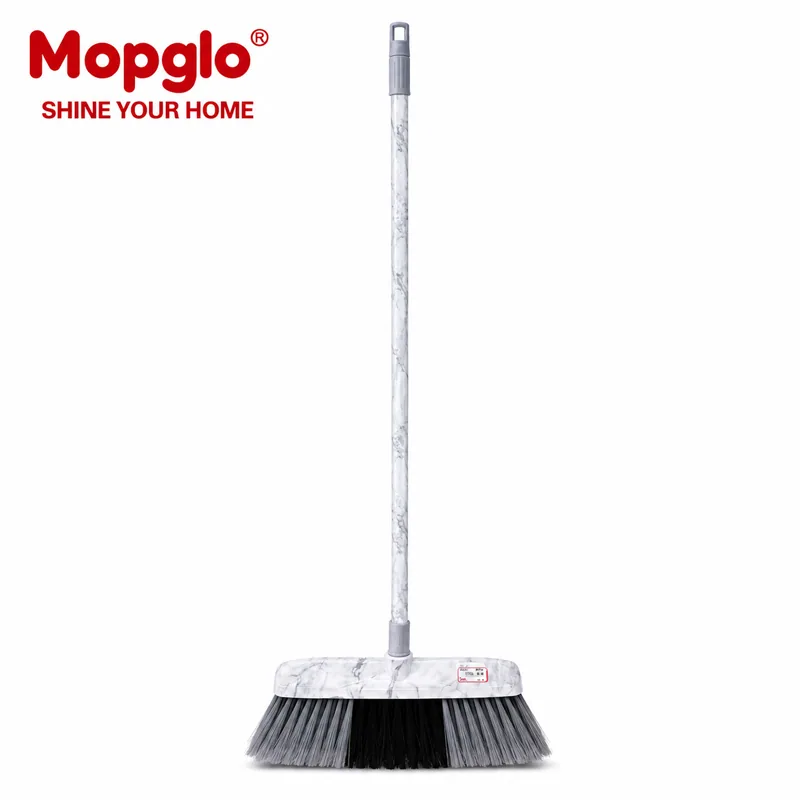
A push broom is the industrial cousin. Bigger block, denser tuft, handle screwed into an angled socket so the whole head sits flat when you stand behind it. You walk forward. Debris gathers in a windrow ahead of the block and you push it out the door.
Head width decides the aisle
Width is the first spec to check, and it sets the rest.
A push broom head covers a lot of floor per stroke. Our Heavy-Duty PP PET Outdoor Broom Head, for example, measures 30 x 7 x 13 cm, with a thick, densely woven bristle block aimed at courtyards, paths and driveways. Wide means fast on open ground. It also means clumsy in a tight space: a wide block cannot get behind a toilet, between pallets or under a low shelf lip.
Narrow means control. A regular broom fits where a push broom physically cannot. It also takes more strokes to clear the same square metres, which is why a janitor sweeping a warehouse aisle with one will hate every shift.
Practical rule for a buying sheet: open floor, wide. Corners and edges, narrow. Professional cleaning trolleys usually carry both. Most homes only need the narrow one. If you stock both ends of that split, start from our outdoor push brooms for the wide side and work inward from there.
Bristle stiffness: PP, PET and nylon sweep differently
Bristle material drives performance more than most buyers expect.
Polypropylene is rigid, chemically resistant and the cheapest of the three common options. That makes PP a natural fit for outdoor, yard, construction and municipal work on rough ground. It is also why a cheap indoor broom can feel scratchy and skip over fine dust: PP has less spring than the alternatives and does not splay into a floor the same way. Polypropylene itself is a tough, water-resistant thermoplastic used across household goods, which is why it survives damp yards and washdowns (Polypropylene, Wikipedia).
PET sits in the middle. Good spring, good abrasion resistance, holds its shape. Warehouses, factories and mixed indoor and outdoor use are its home turf. Our folding dustpan sets use split-tip PET bristles for that reason: fine enough for dust, tough enough for daily use.
Nylon is the gentle one. It tolerates moisture and sweeps with a softer touch, which suits indoor floors and finished surfaces.
Match the bristle to the debris, not to the price list. Big, heavy debris on rough ground wants stiff PP. Fine dust on a smooth floor wants a softer, denser tuft. Damp conditions push you toward materials that will not soften or rot. There is more on this in our PP vs PET vs nylon bristle guide.
Handle angle is the part buyers forget
Look at where the handle meets the head. That angle tells you how the tool is meant to move.
On a regular broom the neck is bent, so the head sits flat while your hands stay close to your body. The stroke is short and controlled. On a push broom the socket is angled so the block stays flat when you lean forward and walk. Push, step, push, step. If the angle is wrong for the user's height, the block tips and sweeps on one edge.
Handle length matters as much as angle. Our reinforced stainless steel and aluminium handles run 0.4 to 0.6 mm wall thickness, and we can change broom handle length for a market under OEM. That is not a small detail. A handle sized for a tall warehouse worker sits too high for a shorter home user, and too low for a tall janitor.
Quick spec sheet checklist
- Head width in centimetres, plus the block height and depth
- Bristle material and stiffness, stated as PP, PET, nylon or a blend
- Handle material, wall thickness and total length
- Socket angle, or at least the intended sweeping direction
- Carton count and pack format for the channel you sell into
When to use a push broom, and when a regular broom wins
Use a push broom on open, continuous floor. Warehouses, workshops, driveways, car parks, yards, loading bays, school halls, factory floors. Anywhere the debris is coarse and the run is long. Push brooms also win outdoors because the block is usually moulded in UV-stabilised plastic that will not rot, split or warp like timber when it sits in the rain. Our outdoor push broom range is built around that idea, from the garden broom to the iron handle broom for industrial sanitation.
Reach for a regular broom indoors: kitchens, offices, aisles, stairwells, around furniture. Fine dust, crumbs, hair, spilled cereal. Same answer anywhere a dustpan is part of the routine, because the narrow head and angled neck let you sweep a small pile straight into the pan instead of chasing it across the floor.
One blunt opinion. Many buyers try to cover both jobs with a single product and end up with a broom that is mediocre at each. Two tools, each right for its job, sell better than one compromise.
Indoor vs outdoor, and the debris each broom meets
Floor type and debris type usually point to the same answer.
| Spec | Push broom | Regular (upright) broom |
|---|---|---|
| Head | Wide block, dense tuft, often a moulded PP head | Narrow head, fine bristles, cut flat |
| Bristle | Stiff PP, PET blends, heavy gauge filament | Soft PP, PET or nylon, fine filament |
| Handle | Long shaft into an angled socket, metal or timber | Shorter shaft into a bent neck |
| Stroke | Push forward, both hands, walk behind it | Pull back, one hand, sweep into a pan |
| Best surface | Concrete, asphalt, paving, warehouse floors | Tiles, laminate, wood, indoor floors |
| Debris | Leaves, grit, sand, packaging, workshop swarf | Dust, crumbs, hair, fine litter |
| Typical channel | Hardware, janitorial, garden, municipal supply | Supermarket, household, homeware chains |
Read the table as a starting point, then check the surface. Polished tile and sealed concrete behave differently under the same bristle, and rough outdoor concrete eats soft bristles fast. Damp leaf litter needs a stiff tuft that will not mat; dry indoor dust needs density more than stiffness.
Range advice: hardware stores vs supermarkets
Two channels, two different baskets.
Hardware stores, building suppliers and janitorial distributors sell replacement and durability. Shoppers arrive with a broken handle or a worn head. Stock push brooms as complete tools plus heads on their own: our outdoor range includes the Heavy-Duty PP PET Outdoor Broom Head at a listed minimum of 480 pcs, and the broom head series for janitorial replacement. Heavy duty sells here. So does anything with a metal handle, because the customer is buying the last broom they plan to buy for a while.
Supermarkets and household chains sell the set, the colour and the grab. The shopper is in an aisle with a trolley, making a five-second decision. That is where broom and dustpan sets earn their shelf: clip-together units, folding windproof pans, a carry bar version packed 40 sets to a carton in blue, purple, beige and pink, and a three-in-one folding set at a listed minimum of 240 sets. Colour range and carton count matter more than bristle chemistry in this channel. A foldable set packed 30 to a carton also keeps freight and shelf space sane.
Selling both channels? A private label programme lets you put the same block and the same handle length behind two brands, with bristle stiffness adjusted per market.
How to start an order with us
CHUANGJIE has been making cleaning tools in Yiwu since 2006, with more than 3,000 SKUs and nearly 300 patents in new materials, moulding processes and moulds. You can buy stock or go OEM.
Stock is the fast route. Pick the items you want, check the minimum order on each listing, and we consolidate the order in Yiwu with inspection, customs clearance, booking and shipment handled end to end, FCL or LCL. Good for a first container or a test run on a new line.
OEM is the route when you need your own colour, logo and spec. Minimums run 2,000 to 8,000 pieces per style per colour. You confirm quantity, we sign the contract and take the deposit, you send Pantone codes or colour samples and logo files, and we adjust colour, bristle stiffness and handle length. A pre-production sample is confirmed before mass production, and every product passes a drop test before it leaves the factory. See the OEM and ODM process for the full flow.
Email mopglohome@gmail.com with the item, quantity and destination port, or use the quote form on our contact page. Tell us the floor and the debris and we will tell you which broom to put in the box.
FAQ
Is a push broom better than a regular broom for a shop floor?
For an open shop floor with coarse debris, yes. A push broom covers more ground per stroke and stands up to grit. For aisles, corners and small spills, a regular broom with a dustpan is quicker and more precise. Many retailers stock both rather than one compromise tool.
Which bristle should I specify for a damp outdoor area?
Stiff polypropylene is the usual pick outdoors because it is rigid, resists water and costs least. PET suits mixed indoor and outdoor use where you want more spring and shape retention. Nylon is the gentler choice for indoor floors. Check the floor roughness too, since soft bristles wear fast on rough concrete.
Can I mix push brooms and dustpan sets in one container?
Yes. Our one-stop procurement covers the full range of roughly 3,000 items, and we consolidate, inspect and clear the shipment in Yiwu, with FCL or LCL booking. Each stock item keeps its own minimum order as shown on its listing.
What is the OEM minimum for a private label broom?
OEM minimums run 2,000 to 8,000 pieces per style per colour. Bristle stiffness, handle length and colour can be adjusted, with colour matched to Pantone codes or physical samples, and a pre-production sample is confirmed before mass production.