Broom Bristles: PP vs PET vs Nylon and How to Choose
Broom bristles are the cheapest part of a broom and the part that decides whether the product feels like a tool or a toy. Pick the wrong filament and a yard broom scuffs vinyl indoors, or a soft dust brush folds flat against wet gravel. Three materials cover most of the market: polypropylene (PP), polyethylene terephthalate (PET) and nylon. This guide compares broom bristle material on stiffness, abrasion, moisture, chemicals, cost and use case, then shows how to put the choice into a purchase order.
One quick chemistry note before the shopping advice. PP is a tough, low-cost thermoplastic that shrugs off many solvents, bases and acids (Polypropylene, Wikipedia). PET is a thermoplastic polyester known for strength and low moisture pick-up (PET, Wikipedia). Nylon is a family of polyamides with good abrasion behaviour and a habit of absorbing moisture from the air (Nylon, Wikipedia). A broom, for the record, is still just stiff fibres fixed to a handle (Broom, Wikipedia). The fibres are where the engineering sits.
Start with the job, not the polymer
Buyers often open with "which material is best". There is no best. There is only best for a floor and a price point. Four questions narrow it down fast:
- What is being swept? Sand, gravel, leaves and workshop swarf behave nothing like flour, hair and fine dust.
- What is underneath? Concrete and asphalt forgive a stiff filament. Polished tile, laminate and wood do not.
- How wet does it get? A broom that lives outdoors in a monsoon market and one that hangs in a dry closet need different filaments.
- What does the shelf say? A value line at a hardware chain and a private-label brush in a homewares catalogue carry different cost ceilings.
Answer those and the material usually picks itself.
PP broom bristles: the stiff, cheap workhorse
Polypropylene is the default for outdoor sweeping, and for good reason. It is rigid, it resists most chemicals, and it is the lowest-cost of the three. Our product team uses PP where the broom has to survive rough ground: courtyards, driveways, yards, construction sites and municipal pavement sweeping.
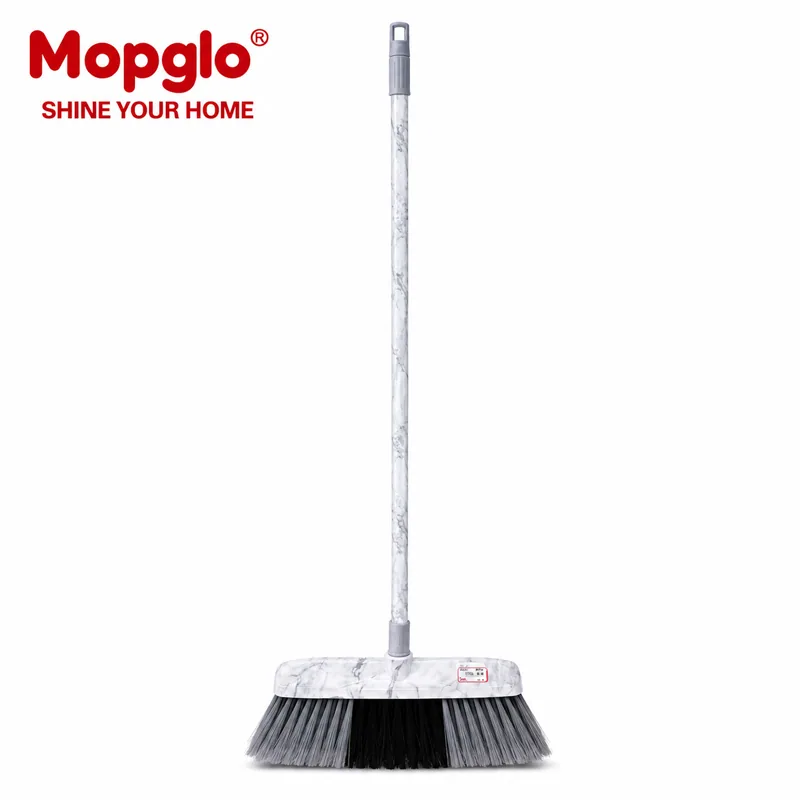
The trade-off is flexibility. PP is stiffer than PET and nylon, which is exactly what you want on gravel and exactly what you do not want on a fine indoor floor, where a hard filament can scatter dust instead of collecting it and can mark soft surfaces. PP also takes UV stabilisation well, which matters if the broom will stand outside for months. Our outdoor push brooms use UV-stabilised virgin polypropylene heads and blocks, including the Garden Broom and the Iron Handle Broom.
Blunt opinion: for a yard broom sold at a value price, over-thinking the polymer is wasted effort. Get the block stiff, the filament thick enough not to curl, and the handle joint solid.
PET broom bristles: the balance most buyers land on
PET sits in the middle and that is its selling point. It has a good balance of springiness and abrasion resistance, and it holds its shape over a long service life. Think warehouses, factories, workshops, garages and the indoor-outdoor broom that gets used on both a kitchen floor and a back step.
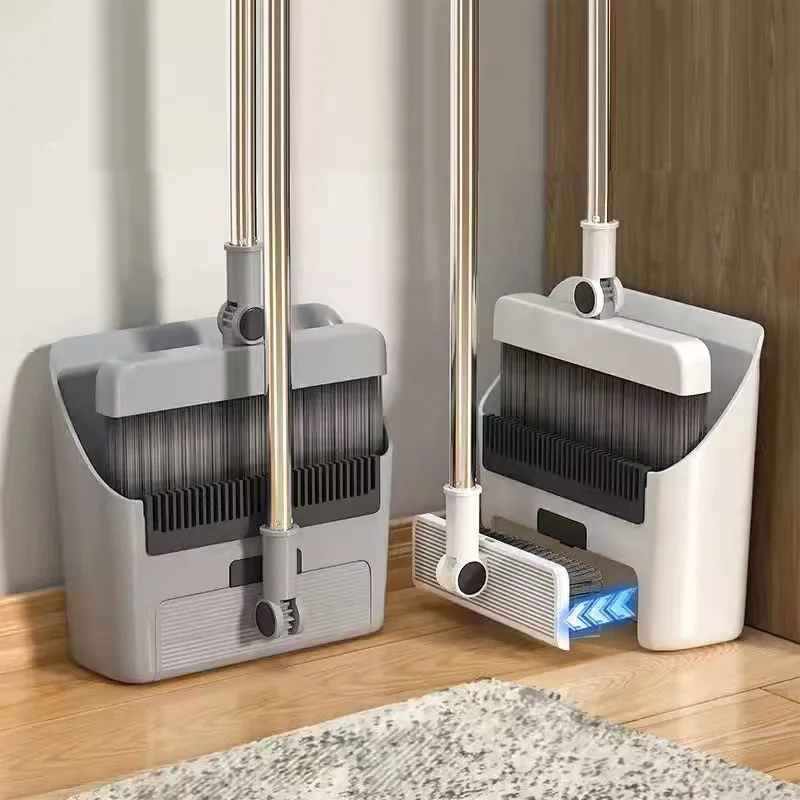
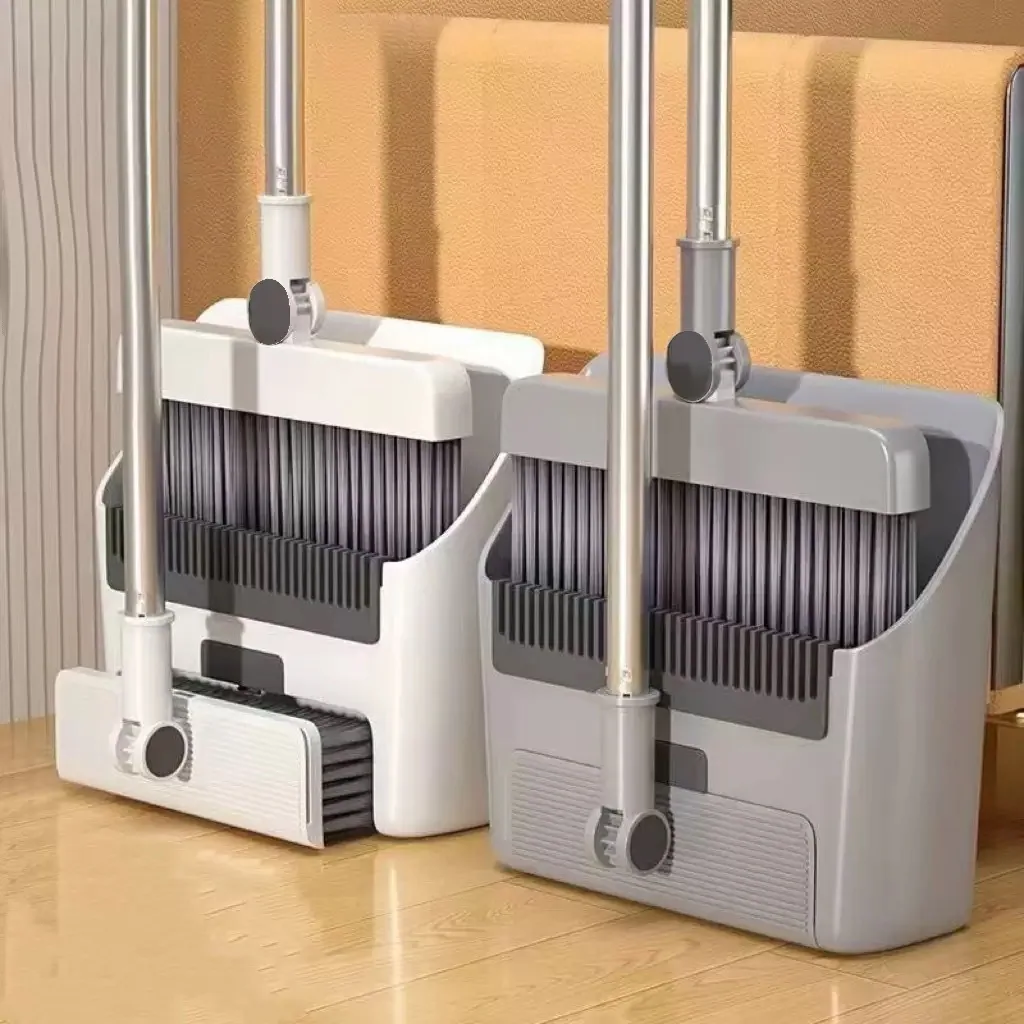
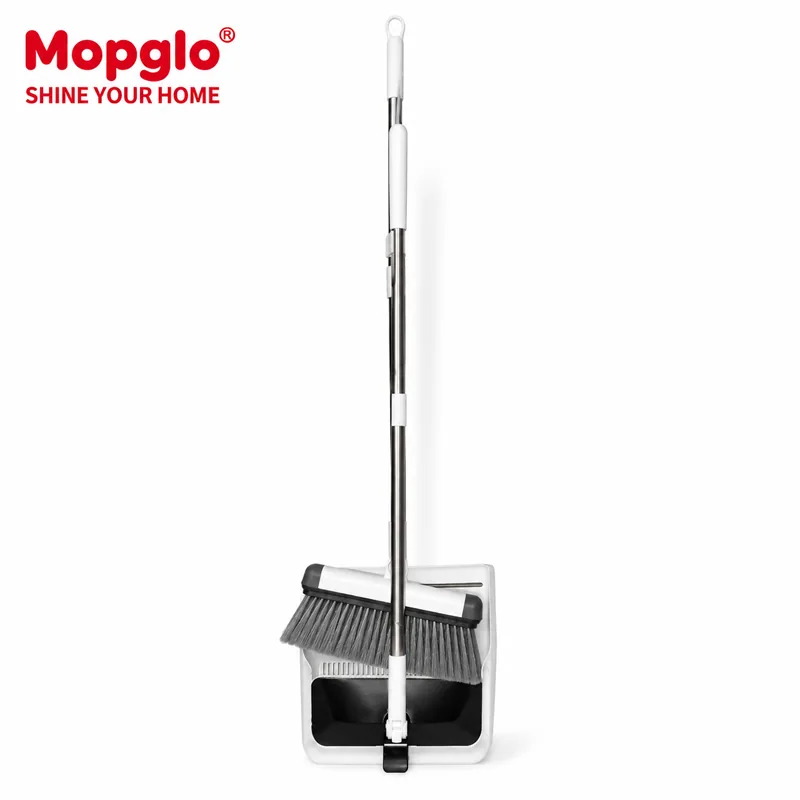
PET also takes a flagged or split tip nicely, which is where fine dust performance comes from. That combination, springy filament with a feathered end, is why so many household sweeping sets in our range run PET. The Folding Broom and Dustpan Combination uses split-tip PET bristles, and our Heavy-Duty PP PET Outdoor Broom Head blends the two polymers to get stiffness from PP and resilience from PET in one block.
That blend is worth knowing about. A pure-material spec is tidy on paper, but a PP/PET mix often gives a better real-world sweep for mixed indoor-outdoor use than either polymer alone.
Nylon broom bristles: gentle, damp-tolerant, overpaid for
Nylon is the premium option. It sweeps gently, it tolerates damp conditions, and it is the material you reach for on interior floors where scratching is the complaint you cannot afford. Soft nylon flagged tips pick up dust from tile and sealed wood without the scratch risk of a hard PP filament.
It is also hygroscopic, meaning it takes up moisture from the air. In a broom filament that matters less than in a precision moulding, because the filaments are thick and dry out, but it is one reason nylon belongs on indoor brushes rather than on a yard broom left in the rain. Nylon is generally the highest-cost of the three, so put it where the customer will feel the difference. On a dust brush, yes. On a driveway broom, no.
Indoor floors also get dry swept far more often than they get washed, which is the sensible routine for wood and laminate anyway. If your range leans indoor, our indoor broom heads cover that side of the catalogue.
Broom bristle material comparison
| Property | PP | PET | Nylon |
|---|---|---|---|
| Stiffness | High, rigid | Medium, springy | Medium to soft |
| Flexibility | Lowest of the three | Good balance | Good, gentle on floors |
| Abrasion resistance | Good on rough ground | Good, holds shape | Very good |
| Moisture behaviour | Does not absorb water, suited to wet outdoor use | Low moisture pick-up | Tolerates damp but absorbs some moisture |
| Chemical resistance | Strong against many solvents, bases and acids | Good in general cleaning use | Good, but watch strong acids |
| Relative cost | Lowest | Middle | Highest |
| Best fit | Yards, driveways, sites, pavement, warehouses with rough floors | Factories, garages, mixed indoor-outdoor, household sets | Interior floors, dust brushes, delicate surfaces |
Cost is relative, not a quote. Ask us for current figures on the item you are looking at.
Flagged tips, split tips and density
Filament material gets the attention. Tip shape and packing density do more of the visible work.
Straight-cut tips are the standard for outdoor sweeping. Stiff, simple, cheap, effective on debris with mass.
Flagged and split tips fan the end of each filament into several fine strands. That is what catches flour, hair and dust rather than pushing it around. It costs more per bristle and it wears faster on abrasive ground, so it belongs on indoor and fine-dust brushes, not on a yard broom.
Density is the other lever. A dense block with thinner filaments sweeps fine particles well and feels soft on the floor. A sparser block with thicker filaments digs into gravel and survives. Density is usually set by tuft count and hole pattern in the block, so it is fixed at mould design stage, not at assembly. If you are specifying a new head, this is the decision to get right early.
Matching the bristle to the market you sell into
Climate and floor habits should shift your mix. Say you supply a hardware chain in a hot, humid coastal city: PP for the outdoor line is a safe call, because the broom will stand outside and a water-absorbing filament is a liability. Imagine a homewares buyer in a market where apartment living dominates and most sweeping happens on tile and laminate: a PET or nylon indoor set with flagged tips fits the shopper better than a heavy yard broom.
Retail format matters too. Sets that clip together and stand on their own sell well in small-format stores and online, where shelf space is tight. Our broom and dustpan sets exist for exactly that reason. Bulk replacement heads are a separate business: janitorial and commercial buyers reorder heads, not full brooms, which is why we keep a replacement head series in the range.
Writing the bristle spec into an OEM brief
Vague briefs produce vague brooms. Send bristle material, filament stiffness, tip type, block width and handle length as a list, plus the floor type the product is aimed at. Bristle stiffness and broom handle length can both be adjusted for a market in our OEM work, and colours can be matched to Pantone codes or a physical sample. Logo options run to embroidery, silk print and heat print, with colour boxes, hot-stamped logos, carton marks and product labels available.
The process is straightforward: confirm quantity, place the order, sign the contract, pay the deposit, then send colour references and logo files. We customise colour, material and style, and you approve a pre-production sample before mass production starts. MOQ for OEM runs 2,000 to 8,000 pieces per style per colour. Full detail sits on our OEM and ODM page.
How to start an order with us
Two routes. If you are buying stock items, each listing carries its own minimum order, so use the figure on that item and nothing else. If you need your own colour, logo, bristle stiffness or handle length, go the OEM route above and start the conversation with the market and the floor you are targeting.
Email mopglohome@gmail.com with the item or the spec, the quantity, and the destination market. Or send the same details through the quote form and we will come back with options from our range of more than 3,000 SKUs. Zhejiang Chuangjie Commodity Co., Ltd. has been making household cleaning tools in Yiwu since 2006, and we handle export paperwork, consolidation, booking and shipment, FCL or LCL, so the order leaves as one shipment rather than five problems.
One last piece of advice. Ask for the pre-production sample and sweep your own floor with it. Bristle specs read fine on paper and feel very different in the hand.
FAQ
Which broom bristle material is best for outdoor sweeping?
PP is the usual choice. It is the stiffest and lowest-cost of the three, it does not absorb water, and it resists many chemicals, so it holds up on concrete, asphalt, gravel and yards. PET blends are a good option for mixed indoor-outdoor use where you want more spring in the filament.
Are nylon bristles worth the extra cost?
On indoor and delicate surfaces, often yes. Nylon sweeps gently and tolerates damp conditions, which reduces scratch risk on tile, laminate and sealed wood. On a driveway broom or a site broom the advantage disappears, so the extra cost buys you very little.
What do flagged or split tips actually do?
They fan the end of each filament into fine strands, which traps dust, hair and flour instead of pushing it around. They cost more per bristle and wear faster on abrasive ground, so they suit indoor and fine-dust brushes rather than outdoor yard brooms.
Can you adjust bristle stiffness and handle length for my market?
Yes, both can be adjusted in our OEM work, along with colours matched to Pantone codes or a colour sample and logo by embroidery, silk print or heat print. OEM minimum order is 2,000 to 8,000 pieces per style per colour, and a pre-production sample is confirmed before mass production.