How to Clean a Broom and Make It Last Longer
You can learn how to clean a broom in about five minutes, and it is the cheapest way to keep one sweeping properly. Most brooms do not die from sweeping floors. They die from hair wrapped around the block, grit packed into the bristle root, and a head left standing on damp bristles in a corner. Clean a broom on a simple schedule and store it off the floor, and you get far more sweeps out of every head. That matters to a household, and it matters to anyone stocking brooms for a supermarket or hardware chain.
Broom care is a product-life question, not just housekeeping
Brooms have changed a lot. Early ones were bundles of twigs or stiff grass bound to a handle, and the basic shape has barely moved since (Broom, Wikipedia). What changed is the material. Plastic blocks and synthetic filament now do the work in most household and janitorial brooms. Polypropylene suits a broom block because it absorbs very little water and resists most household chemicals (Polypropylene, Wikipedia). That is why a plastic head can be rinsed and put back to work instead of rotting like a timber block.
Here is the blunt part. Bristle splay is usually a storage problem, not a manufacturing defect. When a shopper says a broom wore out in a few months, they are often describing a broom that lived in a wet corner, bristles down. Care advice on the pack or the product page is a cheap way to protect your brand from that complaint.
Step one: strip hair and debris while the broom is dry
Do this first. Always. Hair, pet hair, thread and long fibres wrap tighter once they are wet, and wet hair mats into the root of the block where a comb cannot reach it.
- Hold the head over a bin and pick out wrapped hair by hand or with a blunt table knife.
- Run a wide-tooth comb or a stiff brush from the block to the tips, a few rows at a time.
- Shake the head out, or knock the block edge against the bin, to drop loose grit.
- Trim anything still tangled with scissors rather than pulling. Pulling loosens the tufts.
Split-tip and flagged bristles grab more fine dust, and they grab more hair too. If you sell a flagged broom, tell the buyer the comb step exists. Ten seconds of prevention beats a matted head.
Step two: wash the cleaning broom bristles, not the whole broom
Synthetic bristles are easy to clean. The block and the handle joint are the parts you want to keep mostly dry.
Mix a few drops of mild dish soap into a basin of warm water. Swish only the bristle tips through it, working the soap down towards the block with your fingers or a soft brush. Rinse the tips under running water. Do not leave the head soaking. Water sitting at the bristle root softens the set and can work into a hollow or wooden handle.
For heavier soil, a spoon of bicarbonate of soda in the water lifts grease from kitchen brooms. For outdoor push brooms coated in driveway grit, a hose and a stiff rinse is usually enough.
Bristle material changes the wash
| Bristle | Best at | Wash method | Care note |
|---|---|---|---|
| PP | Stiff sweeping, chemical resistance, lowest cost. Yards, sites, rough concrete. | Hose or basin, quick rinse, shake out. | Grit lodges between stiff filaments. Shake and comb before storing. |
| PET | Balance of spring and wear resistance, holds shape. Warehouses, factories, mixed indoor and outdoor. | Warm soapy water, rinse, comb through. | Keeps its shape best when dried head-up. |
| Nylon | Moisture tolerance and a gentle sweep. Indoor floors, fine dust. | Warm soapy water, light agitation. | Do not scrub hard against the block edge. |
| Silicone blade | Wet floors, hair, liquid spills. | Wipe with a damp cloth. | Non-porous, but check the edge for nicks that leave a streak. |
Step three: dry the head up, never head down
This is the step that decides how long the broom lasts. Water runs downhill. Stand a wet broom bristles down and moisture travels into the tuft sockets and sits there.
Shake the head out, then stand or hang it with the bristles pointing up or hanging free in the air. A warm, airy spot out of direct sun works best. Give it a few hours. If the root still feels cool and damp, leave it longer.
Long sun exposure is the other thing to watch. UV degrades most plastics over time, which is why our outdoor push broom heads, such as the Garden Broom, are moulded from UV-stabilised virgin polypropylene.
Step four: store it hanging, or standing on the block
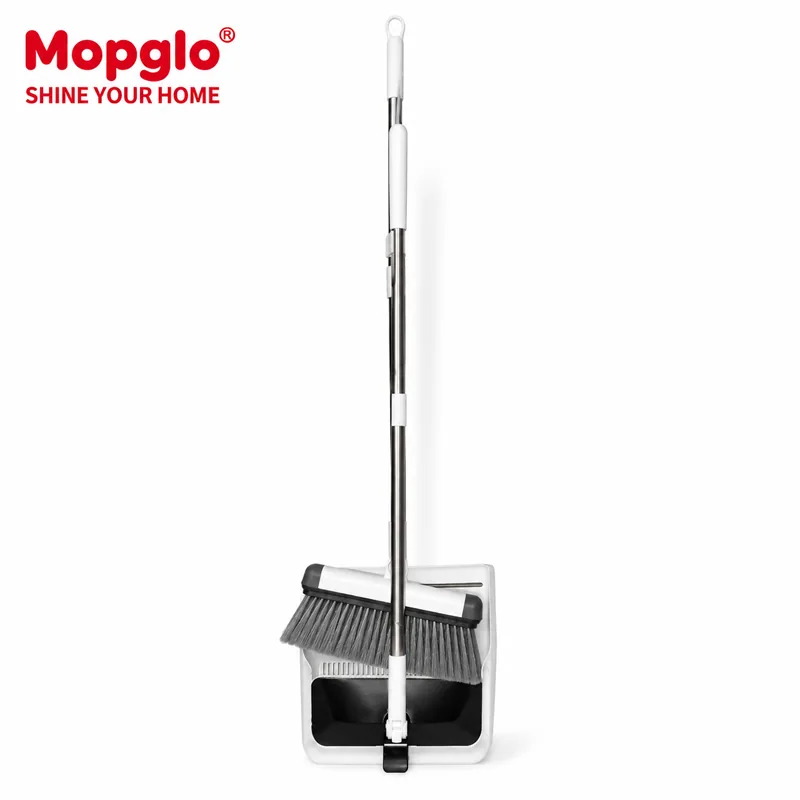
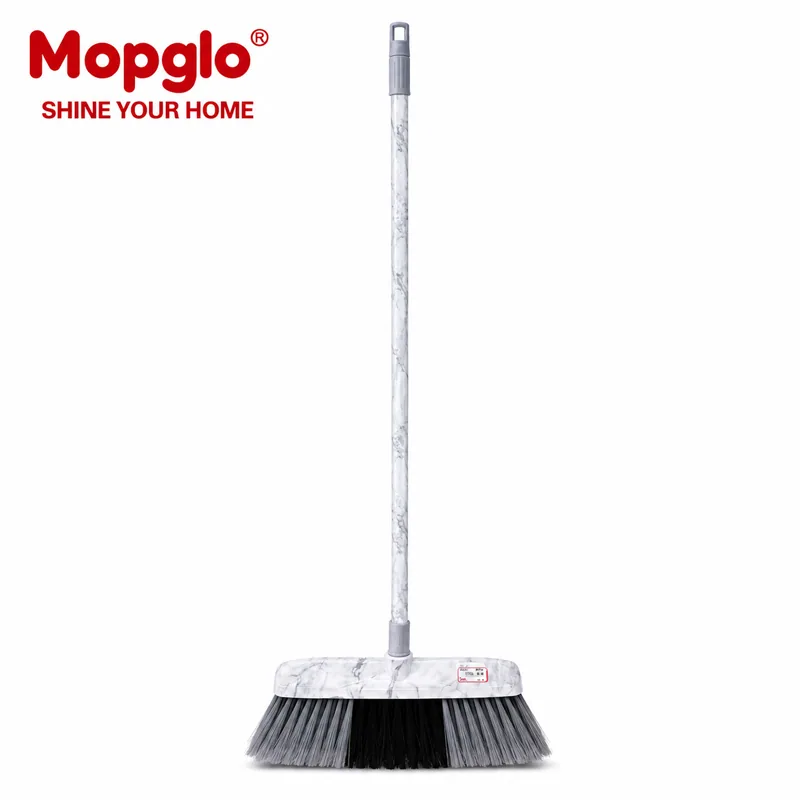
Hanging by the handle eye is the tidiest option. Bristles hang free, air reaches the head, and the block does not carry the broom's own weight. If you cannot hang it, stand the broom on the block edge or on its stand, never on the tips. Do not park a broom in a damp cupboard next to a bucket, and never leave an outdoor broom face down on wet paving.
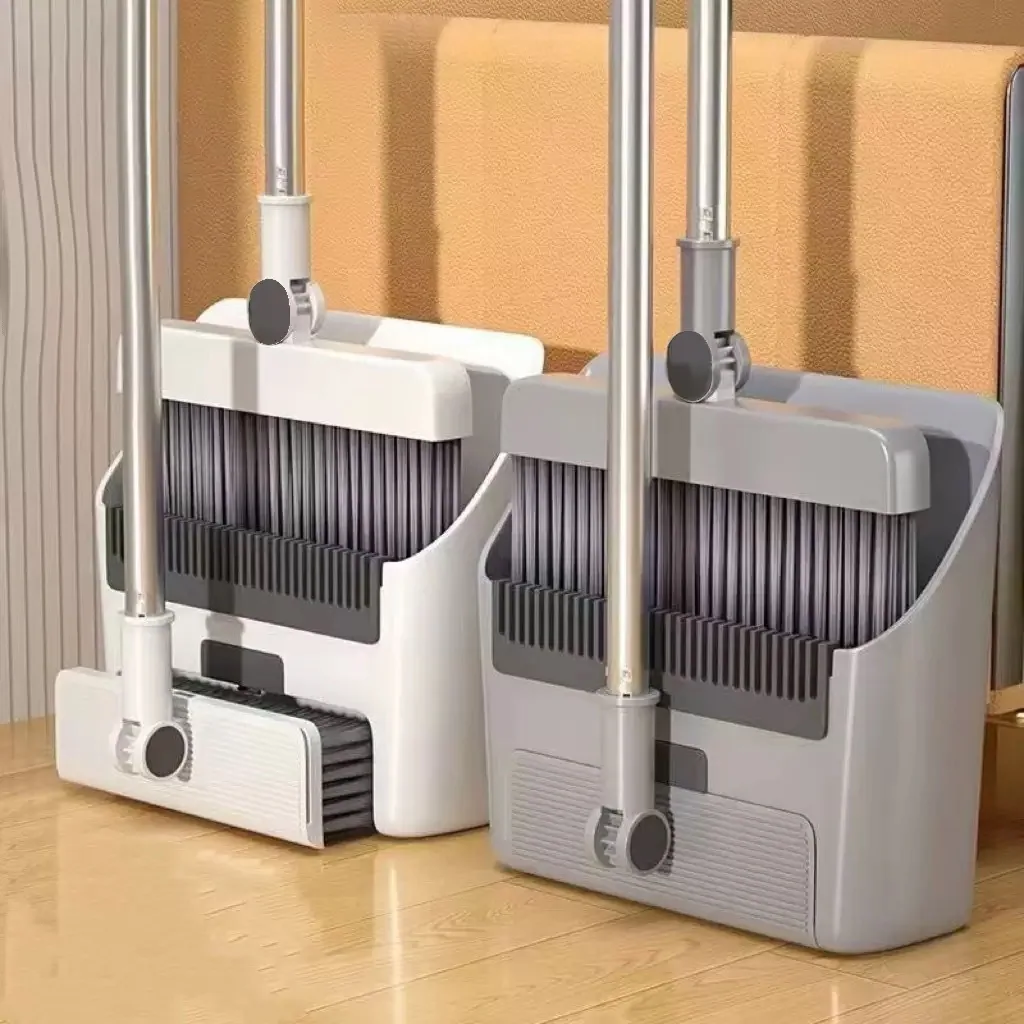
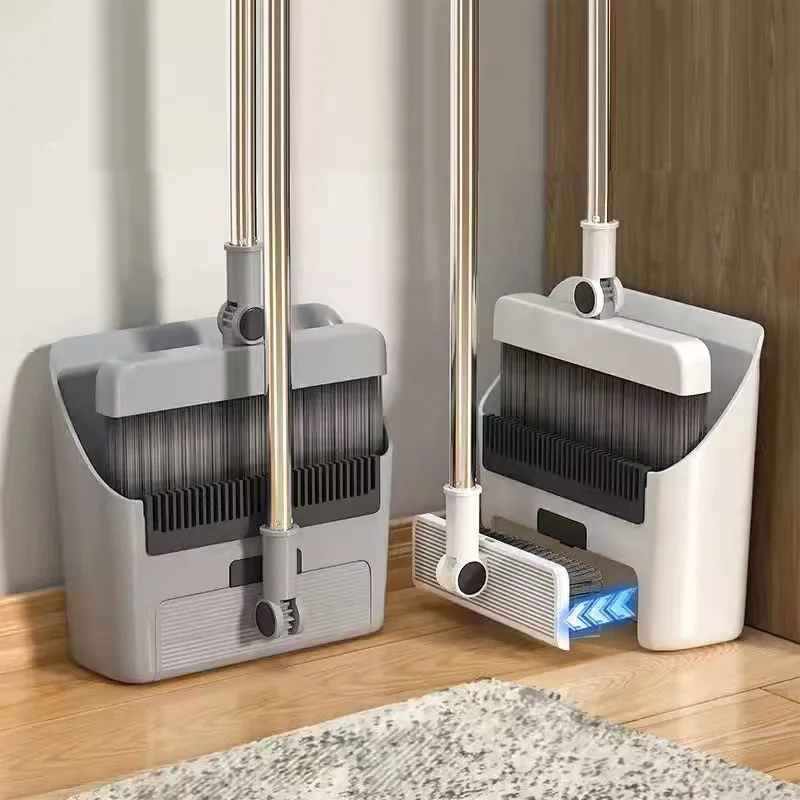
A clip-together set helps here. Sets in our broom and dustpan sets range lock the broom into the dustpan so the unit stands on its own, which keeps bristles clear of the floor and keeps the whole thing out of the way.
When to replace a broom head (the signs that matter)
Brooms do reach the end. Replace the head, not the broom, when:
- the bristle tips no longer touch the floor across the full sweeping width, so you leave a strip of dust behind
- the block is cracked, rocking, or stress-whitened around the tuft holes
- a whole tuft has pulled out, or the centre bristles are worn to a stub
- the head smells sour after washing and drying, which usually means the root never dried properly
Soft indoor heads go first, because they work hard on fine dust and get washed more often. A stiff outdoor head can run for years if you keep it dry and out of standing water.
Replaceable heads are a retail opportunity
Shoppers rarely walk in asking for a broom head. But the moment a broom starts leaving lines, the head is the cheap fix. Carry heads as a companion SKU next to the broom and you give that shopper a reason to buy from you instead of replacing the whole tool somewhere else.
Our broom heads range includes the Broom Head replacement series, a heavy-duty push broom head with a UV-stabilised virgin polypropylene block, plus the Silicone Magic Broom for wet floors and hair. For outdoor ranges there is the Heavy-Duty PP PET Outdoor Broom Head, a PP and PET blend block built for courtyards, paths and driveways.
A few merchandising notes. Print the head size and fitting on the pack, because fitting confusion kills repeat sales. Put the head on the same shelf, at the broom's elbow. Add a one-line care strip to the carton: strip hair, wash tips, dry head-up, hang it. In a hardware chain, a replaceable head is also an easy way into refills, and refills are where repeat margin sits.
What this means when you specify brooms
Bristle material should follow the floor, not the price list. Stiff PP suits yards, sites and rough concrete. PET suits warehouses and mixed indoor and outdoor work. Nylon suits indoor floors where you want a gentle sweep. Our product team can adjust bristle stiffness, handle length and head material for a market, and colour can be matched to Pantone codes or a physical colour sample.
Ask two questions before you order: what floor will this sweep, and how will the buyer store it? A broom sold with a stand, a hanging eye or a clip-together dustpan gets stored better. Stored better means fewer complaints, and fewer complaints means the next order comes back.
How to start an order with us
Chuangjie has been making household cleaning tools in Yiwu, Zhejiang since 2006, with a range of more than 3,000 SKUs and an end-to-end export service that covers order confirmation, production scheduling, quality inspection, consolidation in Yiwu, customs clearance, booking and shipment, FCL or LCL.
Two ways in. For stock items, the minimum order sits on each product listing, so pick the item and use that figure. For OEM, the minimum is 2,000 to 8,000 pieces per style per colour. You confirm quantity and colours, sign the contract, pay the deposit, and share Pantone codes or colour samples plus logo files. We produce a pre-production sample for approval before mass production.
Email mopglohome@gmail.com or send the quote form on our contact page. Tell us the market, the floor type and the pack format, and you will get a straight answer on what we can do.
FAQ
How often should I clean a broom?
Strip hair and debris after every few uses, and give the bristles a soapy wash whenever the head looks dull or starts leaving fine dust behind. Brooms used in kitchens or on wet floors need washing more often than a dry indoor hallway broom.
Can I wash a broom head in the sink or a bucket?
Yes, as long as you only soak the bristle tips. Warm water with a few drops of mild dish soap is enough. Do not submerge the block and handle joint for long, and rinse rather than leaving the head to sit in water.
Should I hang a broom or stand it on the floor?
Hang it by the handle eye if you can, or stand it on the block edge or its built-in stand. The rule is simple: bristles should never carry the weight of the broom or sit in a damp corner.
Do you supply replacement broom heads for wholesale buyers?
Yes. Our broom heads range covers a heavy-duty push broom head with a UV-stabilised polypropylene block, a silicone magic broom and outdoor PP and PET heads. Stock item minimums sit on each listing; OEM runs are 2,000 to 8,000 pieces per style per colour.